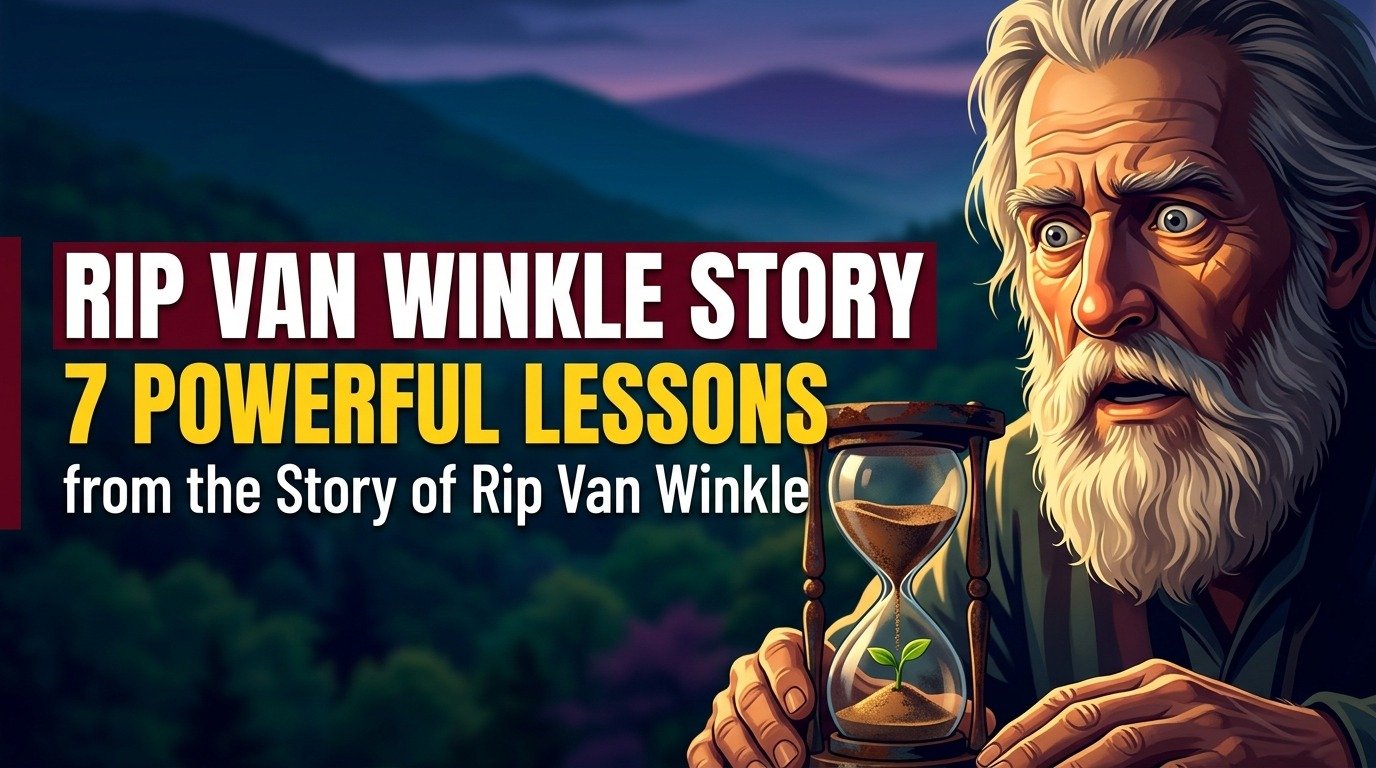
Read the Rip Van Winkle story with moral. Learn key lessons, summary, and meaning of the story of Rip Van Winkle in simple English. Enjoy the complete Rip Van Winkle story with moral, characters, and key lessons for kids and adults in simple English.
The Rip Van Winkle story is a classic American short tale that has been shared for more than 200 years. Written by Washington Irving in 1819, the story of Rip Van Winkle follows a lazy man who falls asleep in the mountains and wakes up twenty years later to a whole new world.
In this blog, you get a simple, clear version of the Rip Van Winkle story, plus a short moral lesson children and adults can understand. We will also explain the main characters, the life lesson, and why this Rip Van Winkle story still matters in modern times.
What Is the Rip Van Winkle Story?
The Rip Van Winkle story is a short fictional tale set in a small Dutch‑American village at the foot of the Catskill Mountains before the American Revolution. It is famous for showing how time can pass quickly when a person avoids work and responsibility.
Core Idea
- Rip Van Winkle is a kind but lazy man who loves resting more than working.
- One day he goes up the mountain, drinks strange liquor, and falls into a deep sleep.
- He wakes up twenty years later, and everything in his village has changed.
- The story of Rip Van Winkle teaches a simple moral: “If you snooze, you lose.”
This timeless story is often read to children as a bedtime story and is also used in classrooms to talk about hard work and responsibility.
Full Rip Van Winkle Story for Kids
The Tale of Rip Van Winkle
Introduction: The Village and the Man
In the years preceding the American Revolutionary War, nestled at the foot of the majestic Catskill Mountains in New York, laid a quiet village established by early Dutch colonists. Among its residents was Rip Van Winkle, an amiable, well-loved, but profoundly unmotivated man. Rip was inherently helpful to his neighbors—always willing to assist in building a fence or running an errand—but he possessed an intense aversion to profitable labor or tending to his own family’s farm, which was in a state of perpetual ruin.
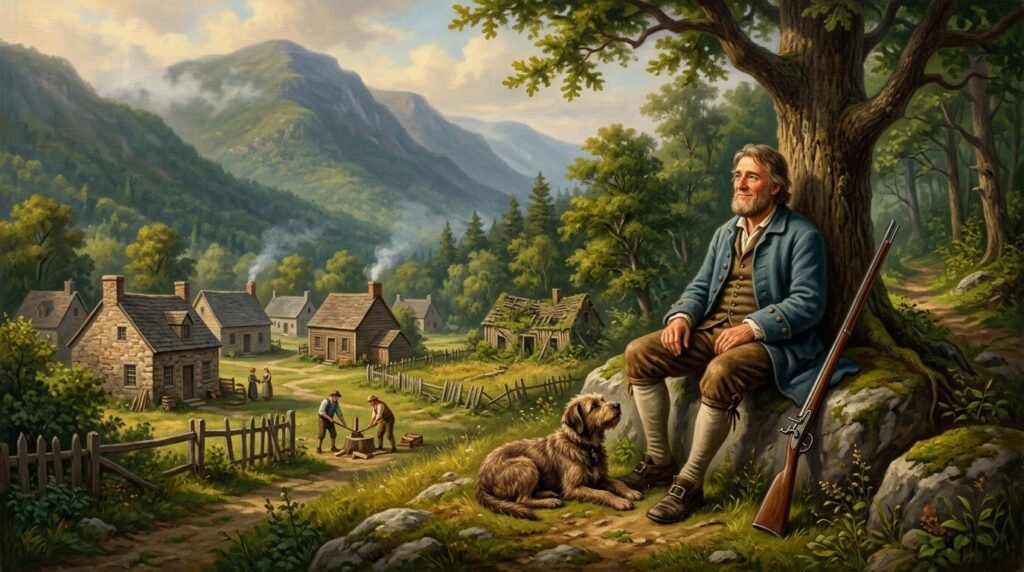
His relentless idleness was a constant source of friction with his wife, Dame Van Winkle, who frequently and vociferously reprimanded him for his lack of ambition. To escape her sharp tongue and his domestic responsibilities, Rip would often take his musket and his loyal dog, Wolf, and wander deep into the surrounding wilderness.
The Mountain Encounter
On one crisp autumn afternoon, Rip wandered higher into the Catskills than he ever had before. As evening approached and he prepared to descend, he heard a voice calling his name. He soon encountered a strangely dressed, bearded man in antiquated Dutch clothing, struggling to carry a heavy keg of liquor up a dry ravine.
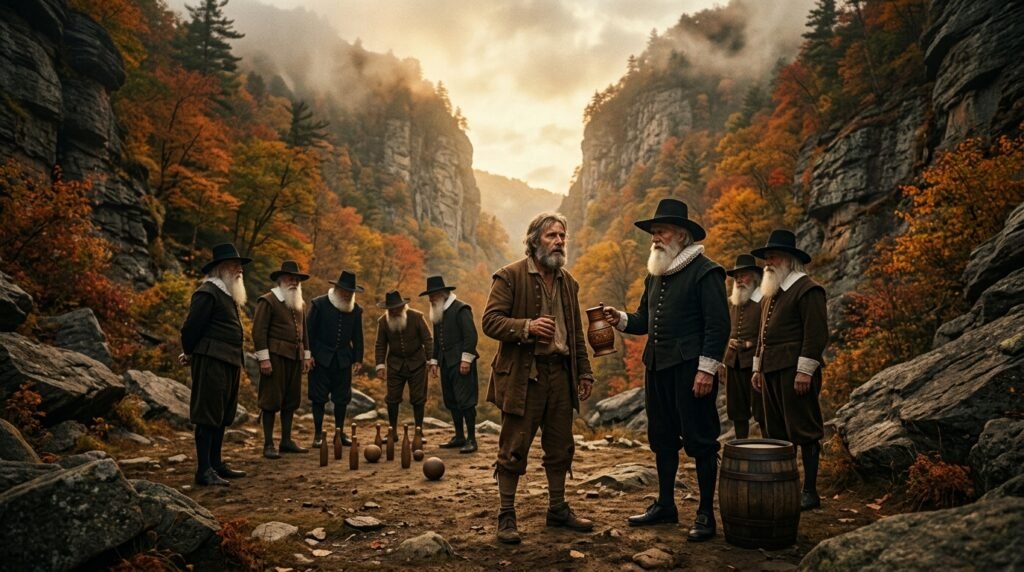
Always willing to help anyone but himself, Rip assisted the stranger. They carried the keg to a hollow amphitheater in the mountains, where Rip discovered a peculiar group of similarly dressed, solemn men playing a game of ninepins. The rolling balls echoed like distant thunder. The men offered Rip a flagon of the liquor. Parched and fatigued, he drank deeply. The mysterious beverage soon overtook his senses, and Rip fell into a profound, heavy sleep.
The Awakening
When Rip finally opened his eyes, he found himself back on the sunny knoll where he had first seen the stranger. It was a bright morning. Reaching for his polished musket, he found only a heavily rusted, rotting firearm in its place. His dog, Wolf, was nowhere to be seen. Furthermore, his joints were stiff, and he was astonished to discover that his beard had grown a foot long and turned completely gray.
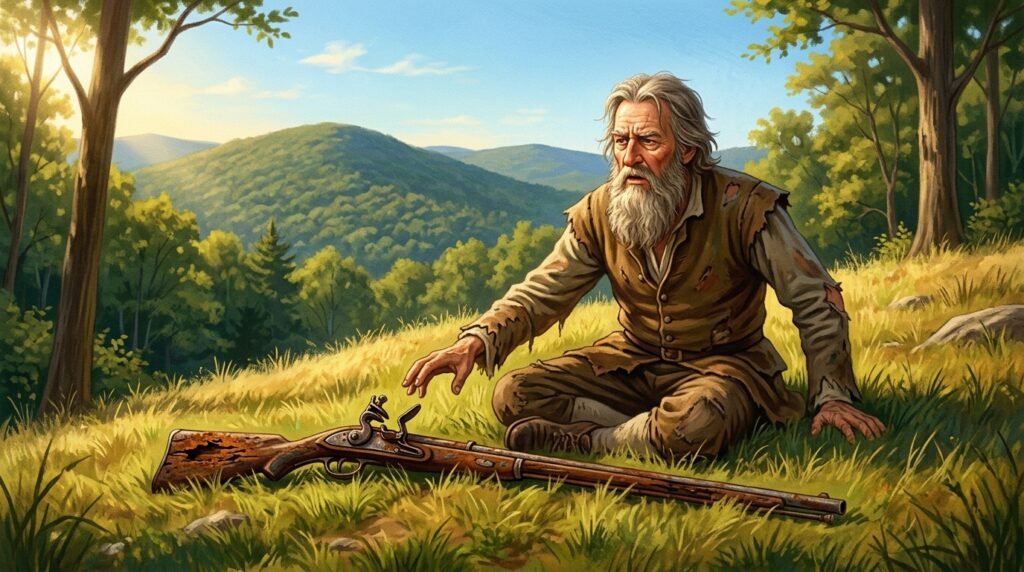
Confused and worried about the impending scolding from his wife, Rip made his way back down the mountain.
The Return to a New Era
Upon returning to the village, Rip realized that everything had fundamentally changed. The village was larger, the architecture was different, and he did not recognize a single face he passed. The people stared at him, murmuring about his ragged appearance and long gray beard.
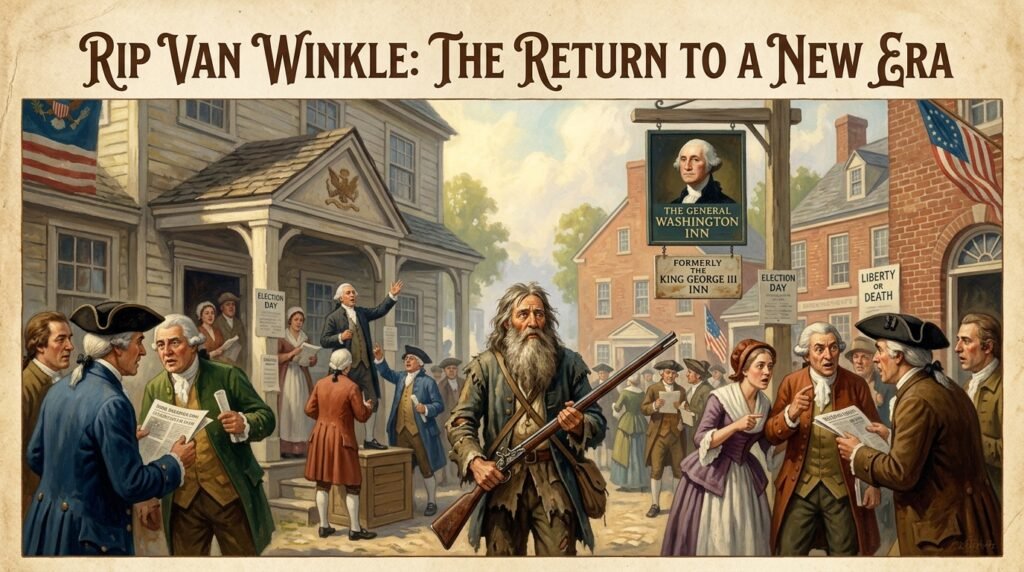
When he reached his own home, he found it abandoned and decaying. Seeking solace, he went to the village inn, formerly his favorite retreat. The inn itself was transformed; the sign that once bore the face of King George III of England had been repainted to depict a man named General George Washington. The lazy, tranquil atmosphere he remembered had been replaced by a bustling, argumentative crowd discussing topics completely alien to him: elections, citizens, and liberty.
The Resolution
When the villagers questioned his political allegiances, a confused Rip declared himself a loyal subject of the King, nearly inciting a riot. He desperately asked after his old friends, only to learn they had either fallen in a recent war, moved away, or passed on from old age.
Eventually, a young woman stepped forward, carrying a child. She revealed her name was Judith Gardenier—Rip’s own daughter, now fully grown. She explained that her father, Rip Van Winkle, had wandered into the mountains twenty years ago and never returned. She also shared that Dame Van Winkle had recently passed away after bursting a blood vessel during an argument with a peddler.
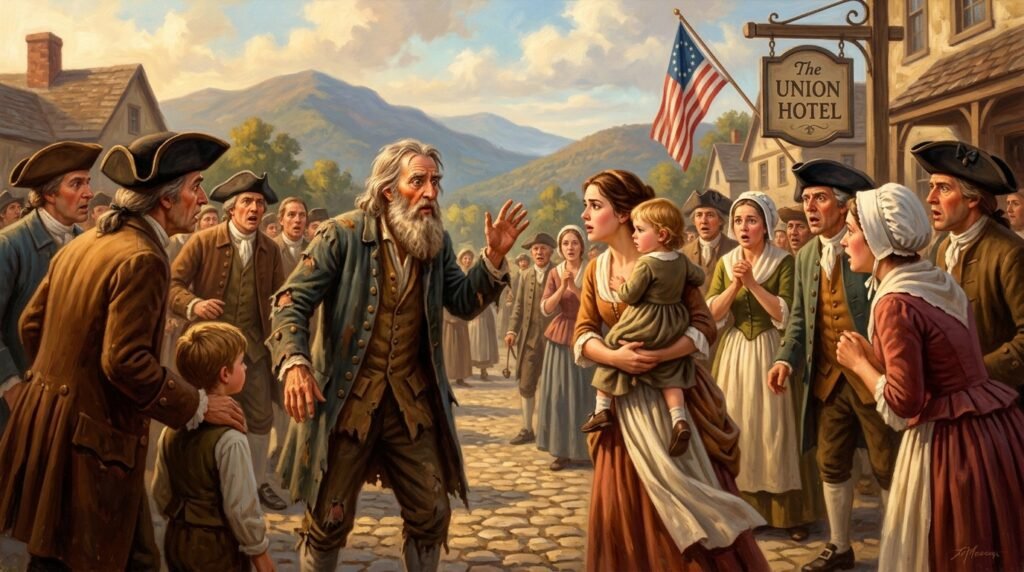
Realizing the staggering truth, Rip revealed his identity. He had slept through the entire American Revolution. The world had moved on entirely without him. Taken in by his loving daughter, Rip lived out his remaining days returning to his old habits of idleness, now socially accepted as a venerable patriarch of the village, telling the tale of his twenty-year slumber to anyone who would listen.
Life Lessons for Kids
The story of Rip Van Winkle, while a charming piece of folklore, serves as a powerful allegory regarding time, change, and personal responsibility.
- The Inevitability of Change: Rip slept through a profound paradigm shift—the birth of a new nation. In life and business, the environment around us is in a state of constant evolution. Refusing to engage with the present does not stop the future from arriving; it merely ensures you will be left behind.
- The Cost of Avoidance: Rip’s primary coping mechanism for his problems (his struggling farm and his marital strife) was to literally walk away and ignore them. By avoiding his responsibilities, he forfeited twenty years of his life, missing his children growing up and the chance to build a meaningful legacy.
- Active vs. Passive Participation: Rip was a passive participant in his own life, allowing circumstances and other people to dictate his actions. The story underscores the importance of active engagement. Time is a non-renewable resource; spending it in a state of “slumber”—whether literal or metaphorical complacency—leads to obsolescence.
- Adaptability is Crucial: When Rip returned, his survival and integration depended on his ability to eventually understand and adapt to the new “George Washington” era, leaving his “King George” mindset behind. Success requires continuous learning and the flexibility to adapt to new realities.
Key Characters in the Rip Van Winkle Story
Understanding the characters helps readers connect better with the Rip Van Winkle story.

Main Characters
- Rip Van Winkle – The kind‑hearted but lazy man who falls into a long sleep.
- Rip’s wife – A strict, nagging woman who often scolds him for being idle.
- Judith Gardenier (Rip’s daughter) – A grown‑up daughter who takes Rip in when he returns.
- The mysterious man with the keg – A strange figure who leads Rip to the cave and offers him the drink.
- The nine‑pin players – Odd‑looking men in old‑fashioned clothes who seem to live outside normal time.
- The villagers – The people of the small Dutch village who change over the passing years.
These characters together make the story of Rip Van Winkle feel both magical and real.
The Real Moral of the Rip Van Winkle Story
The moral of the Rip Van Winkle story is simple and powerful: If you snooze, you lose.
What the Moral Means
- Laziness and delaying work can cause you to miss opportunities.
- Time passes whether you are active or not; if you are not responsible, you risk losing years of growth.
- The story warns that avoiding responsibility may be comfortable for a while, but it harms your future.
In simple words for children:
“Work hard today so you don’t regret tomorrow. Don’t waste your time sleeping or doing nothing, or you may wake up to a world that has left you behind.”
Parents and teachers can use this Rip Van Winkle story moral to encourage kids to complete homework, help at home, and follow daily routines.
How Kids Can Apply the Moral of the Rip Van Winkle Story
The Rip Van Winkle story for kids is not just entertainment. It can guide daily habits and choices.
Simple Ways Children Can Learn From Rip Van Winkle
- Do schoolwork on time – Instead of postponing homework, they can finish it early and enjoy free time later.
- Follow a daily routine – Fixed times for study, play, rest, and sleep help children grow stronger and wiser.
- Help at home – Small tasks like cleaning their room or setting the table build discipline and responsibility.
- Set small goals – Reading one page, drawing one picture, or practicing math for ten minutes each day creates big improvement over time.
Parents can sit with children after reading this Rip Van Winkle story with moral and ask:
- “If you were Rip, what would you do differently?”
- “Which tasks do you sometimes leave for later?”
This simple discussion turns the Rip Van Winkle tale into a practical life lesson.
Why Rip Van Winkle Remains Popular Today
The Rip Van Winkle story has stayed popular for many reasons.
Reasons for Its Lasting Popularity
- Easy to understand – The language in simple versions (like the Rip Van Winkle story with moral for kids) is clear and friendly.
- Timeless theme – The idea of “snoozing” while time passes is still true today, even in a world of smartphones and busy schedules.
- Used in schools – Many teachers read the Rip Van Winkle story to talk about history, laziness, change, and personal growth.
- Cultural references – People still use the name “Rip Van Winkle” for things like old whiskey, songs, and video‑game enemies, which keeps the story alive.
Because of these reasons, the story of Rip Van Winkle continues to appear in children’s books, cartoons, and school lessons.
Frequently Asked Questions (FAQ)
Q1: What is the main moral of the Rip Van Winkle story?
The main moral of the Rip Van Winkle story is that laziness and wasting time can cause a person to miss important years of life. The phrase “If you snooze, you lose” summarizes this idea.
Q2: How long did Rip Van Winkle sleep?
In most versions of the Rip Van Winkle story, he sleeps for about twenty years. When he wakes up, he finds that his village, his friends, and even his family have changed.
Q3: Is the Rip Van Winkle story for kids or adults?
The original Rip Van Winkle story by Washington Irving is a short story for adults, but simple versions (like the Rip Van Winkle story with moral for kids) are created especially for children. Both age groups enjoy the tale because of its clear lesson.
Q4: Who is Rip Van Winkle in the story?
Rip Van Winkle is a kind, lazy man who avoids work and enjoys resting. He goes up the mountains, drinks strange liquor, and falls into a deep sleep. When he wakes, he returns to a changed world.
Q5: Can parents read this story to children?
Yes. Reading the Rip Van Winkle story for kids before bedtime is a great way to teach responsibility and time management through an engaging tale.
The Rip Van Winkle story is more than a fun fairy tale; it is a powerful lesson about the value of time and hard work. Through the simple story of Rip Van Winkle, children and adults can understand that life does not stop while we wait or delay.
Whether you read the classic version by Washington Irving or the Rip Van Winkle story with moral for kids, this tale will remind you that each day is precious. By acting early and being responsible, you can avoid becoming a real‑life “Rip Van Winkle” who wakes up to a world that has moved on.
Thank you so much for visiting ripword.com. We truly appreciate your time and support. Your interest in our RIP quotes, jokes, images, and heartfelt messages inspires us to keep creating and sharing meaningful and high-quality content. We’re constantly adding new and unique posts to help you express emotions, honor memories, and find the right words when you need them most. Don’t forget to bookmark our site and visit often — there’s always something new waiting for you if you return here. Happy browsing, and we pray to don’t seeing you again for, enjoy happily and god blessing you and your entire families – Happy Journey.